At a High Level: How Recycled Paper Is Made
It’s easy to idealize and oversimplify the paper recycling process because it’s been around for decades. However, it’s a complex effort that requires energy and chemicals. Post-consumer paper must be sorted and de-inked before the pulp is bleached and restored to a usable product.
Each time paper fibers are recycled using this method, they become weaker, which affects the quality of the end products they help create. The American Forest & Paper Association says recycled paper fibers can be reused five to seven times. This means companies need to pay close attention to the type of recycled paper pulp they source.
Maintaining the Quality of Formica® Laminate in a Sustainable Way
Introducing sustainable manufacturing processes invariably requires companies to evaluate the impact on product quality. For Formica Group, maintaining product quality and durability is key so our customers can trust that their Formica® Laminate will deliver on expectations.
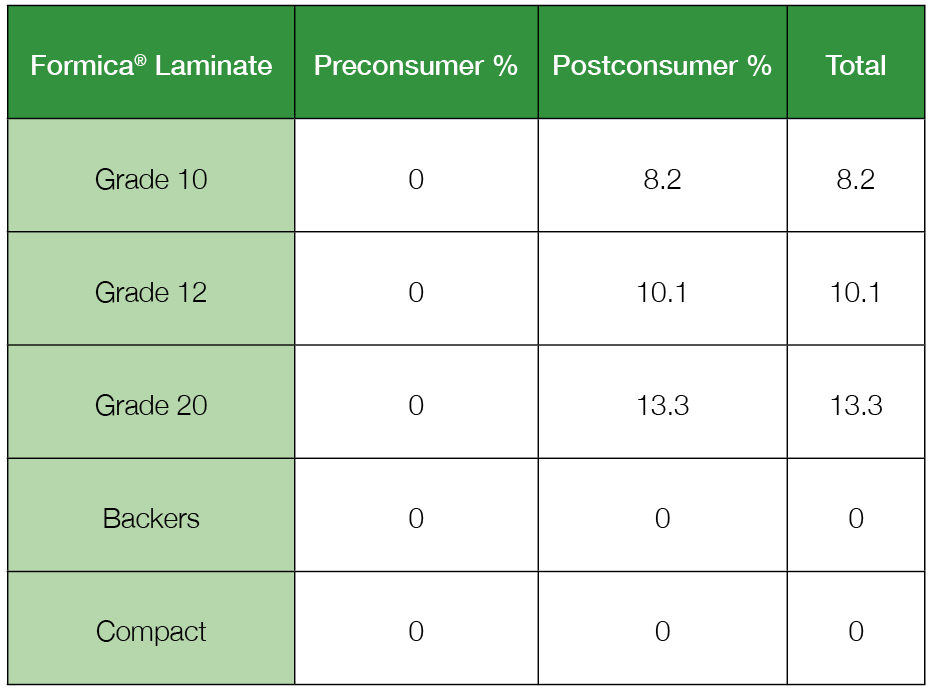
When we evaluate new sustainability initiatives for product manufacturing, we first complete a life-cycle assessment (LCA). This process evaluates the details of the entire environmental footprint of the product from raw material extraction to the finished Formica® Laminate leaving the factory. In this case, an LCA helps us assess the appropriate amount of recycled content that can be used in the final product while maintaining our quality standards.
What About Sourcing Sustainable Virgin Paper Content?
In addition to being manufactured with post-consumer recycled content, Formica® Laminate holds full FSC® certification for the virgin paper used. This designation certifies that the wood the paper is made from comes from a controlled source that doesn’t engage in unregulated deforestation.
Guidance from the EPA’s Waste Management Hierarchy
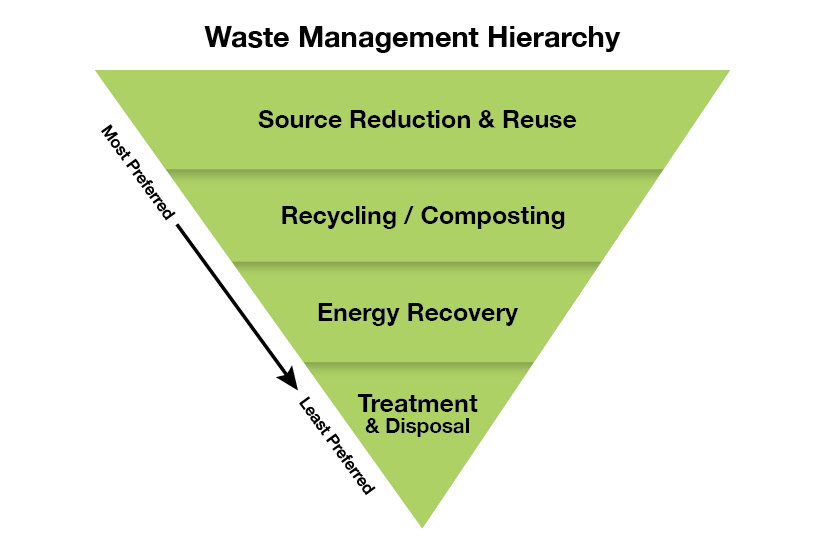
The EPA’s Waste Management Hierarchy prioritizes source reduction and reuse of products whenever possible, with alternatives listed in descending order of preference. It’s a helpful model for thinking about the many ways we can adjust our everyday activities to make a difference. Formica Group incorporates these recommendations by reducing the sources of waste during manufacturing wherever possible and by designing beautiful, long-lasting surfaces.